
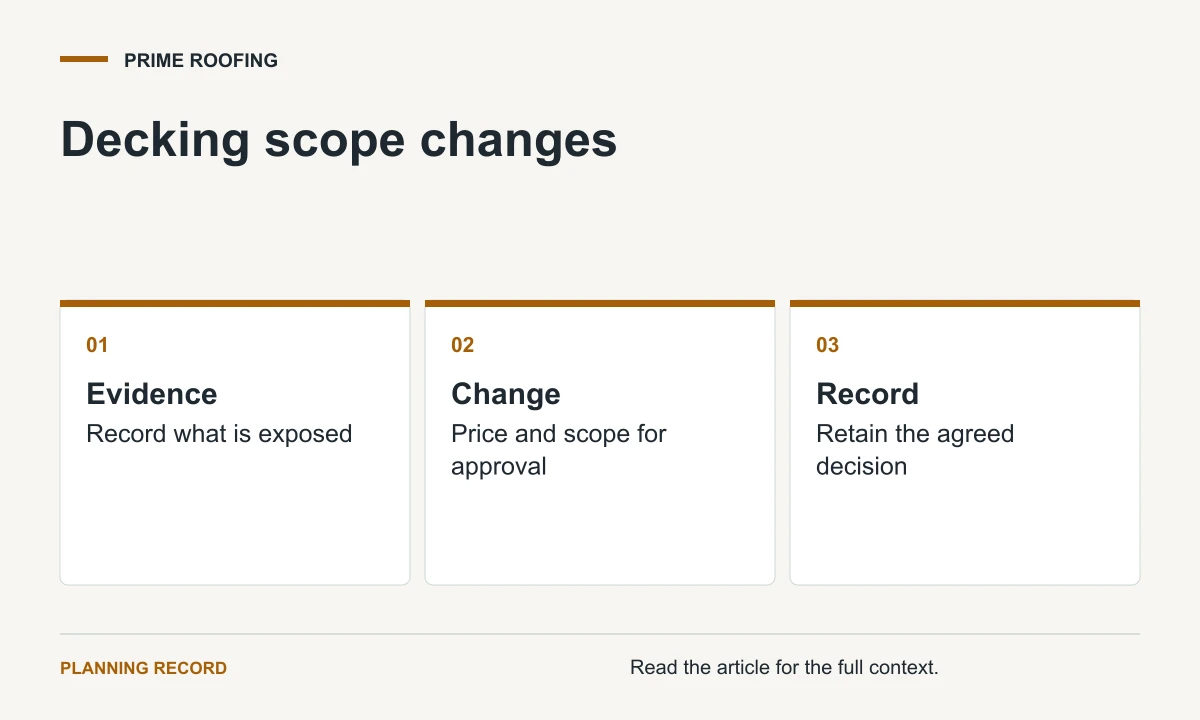
Roof decking exposed during replacement can reveal conditions that were not visible at quotation stage. The contract should explain how those findings will be documented and how additional work will be approved. An allowance is not permission for an undefined expansion of scope.
Establish the change process in advance
Ask which decking assumptions the estimate uses and what remains concealed. Clarify how the contractor will provide photographs or findings, who authorizes changes and how pricing will be explained before additional work proceeds.
If a concern is found, request its location and the proposed response. Separate replacing affected decking from any wider structural assessment the findings may require. Avoid choosing a repair solely from a photograph without the relevant professional evaluation.
Keep the scope record together
Retain the original quote, documented findings, approved change and completion record. Ask whether the change affects sequencing, material requirements or the anticipated handover. A revised total should be traceable to a defined change rather than an unexplained extra line.
This process helps both parties distinguish a foreseeable allowance from a newly discovered condition. It does not eliminate uncertainty in concealed roof assemblies.
Review roof replacement services and contact Prime Roofing to discuss the assessment and change-approval process before work begins.